


Key Takeaways
- Most birth control methods do not cause significant weight gain for most people
- The birth control shot has the strongest link to weight gain in studies
- Hormonal methods can affect appetite, water retention, or metabolism differently
- Non hormonal options are least associated with weight changes
- Individual response matters more than the method itself
Introduction
Many people worry about weight gain when considering birth control. This concern is common, valid, and often influenced by stories online or from friends. When searching for the best birth control to avoid weight gain, it helps to separate myths from medical evidence.
Scientific research shows that most modern birth control methods do not cause major or permanent weight gain. However, some methods are more likely than others to be associated with changes in appetite, fluid retention, or body composition. This article explains what research shows, which options are least linked to weight gain, and how to think about birth control choices in a healthy, informed way.
Understanding Weight Changes and Birth Control
Weight changes can happen for many reasons, including
- Natural growth and development
- Hormonal fluctuations
- Changes in appetite or eating habits
- Stress, sleep, and activity levels
Because these factors often occur around the same time someone starts birth control, it can feel like birth control is the cause, even when it is not the main factor. This is why studies that compare people using different methods over time are important.
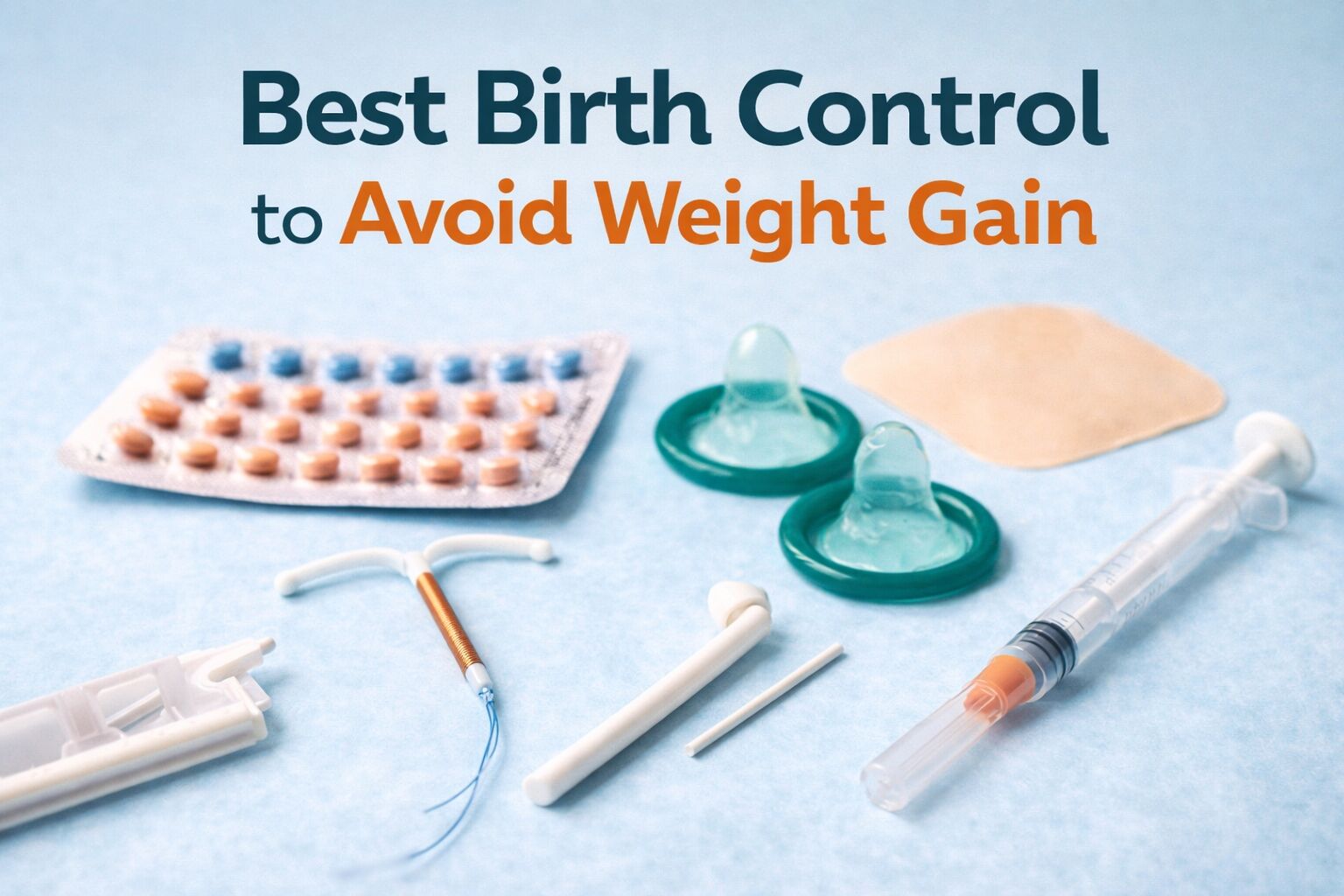
Best Birth Control to Avoid Weight Gain A Practical List
1. Copper Intrauterine Device
The copper intrauterine device is a non hormonal birth control method. Because it does not release hormones, it is not associated with weight gain.
Why it is considered weight neutral
- No hormones affecting appetite or metabolism
- Does not influence water retention
- Long term method with stable effects
Things to know
- Periods may be heavier or more uncomfortable for some users
- Requires placement by a healthcare professional
This option is often recommended for people who want to avoid hormonal side effects altogether.
2. Hormonal Intrauterine Devices
Hormonal intrauterine devices release a small amount of hormone locally in the uterus rather than throughout the body. Research shows minimal average weight change for most users.
Why weight gain is unlikely
- Lower hormone dose compared to pills or injections
- Hormone stays mostly local rather than systemic
- Less effect on appetite for many users
Things to know
- Some people experience temporary bloating early on
- Individual responses vary
3. Birth Control Pills With Low Hormone Doses
Modern birth control pills use much lower hormone doses than older versions. Large studies show no consistent link to significant weight gain.
Why pills are often weight neutral
- Low estrogen levels reduce fluid retention
- Weight changes are usually small and temporary
- Lifestyle factors play a larger role
Important context
Some people may notice slight changes in appetite or water retention, especially during the first few months. These effects often settle over time.
4. Birth Control Patch and Vaginal Ring
The patch and ring deliver hormones steadily rather than in daily doses. Research shows similar weight outcomes to pills.
Why they are not strongly linked to weight gain
- Stable hormone delivery
- No evidence of long term weight increase
- Comparable metabolic effects to oral pills
Some users report short term bloating or breast tenderness, which can feel like weight gain but usually is not fat gain.
5. Birth Control Implant
The implant releases a hormone over several years. Studies show mixed results, with most users not gaining significant weight, but a small group experiencing noticeable changes.
Why experiences differ
- Hormone sensitivity varies by individual
- Appetite changes may occur for some people
- Weight gain is not universal
This option can still be suitable for many people but may not be ideal if weight change is a major concern.
6. Birth Control Shot
The birth control shot is the method most strongly linked to weight gain in medical studies.
Why weight gain is more common
- Hormone affects appetite and fat storage
- Effects last for months at a time
- Some users experience steady weight increase
Because of this, the shot is often not recommended for people who are concerned about weight changes.
7. Barrier Methods
Barrier methods such as condoms do not use hormones and therefore do not affect weight.
Why they are weight neutral
- No hormonal effects
- No impact on appetite or metabolism
These methods are often used together with other approaches for pregnancy and infection prevention.
Comparison Table Weight Gain Risk by Method
| Birth Control Method | Association With Weight Gain |
| Copper intrauterine device | No association |
| Hormonal intrauterine device | Very low |
| Low dose birth control pills | Very low |
| Patch or ring | Very low |
| Implant | Low to moderate for some |
| Birth control shot | Higher likelihood |
| Barrier methods | None |
Why Some People Still Gain Weight
Even with weight neutral methods, some people experience changes because
- Hormones can influence hunger signals
- Reduced nausea may increase appetite
- Life stage changes occur at the same time
This does not mean birth control causes weight gain for everyone. Bodies respond differently.
A Health Focused Way to Choose Birth Control
Rather than focusing only on weight, healthcare professionals often encourage looking at
- Overall health goals
- Menstrual symptoms
- Convenience and consistency
- Side effect tolerance
- Medical history
Weight should be one factor, not the only factor.
Frequently Asked Questions
Is there a birth control that guarantees no weight gain
No method can guarantee this, but non hormonal options are least associated with weight changes.
Does birth control slow metabolism
There is no strong evidence that modern birth control significantly slows metabolism.
Is weight gain permanent
If weight changes occur, they are often small and may reverse after stopping or switching methods.
Can switching methods help
Yes. If one method does not suit your body, another may feel better.
Should weight concerns stop someone from using birth control
Weight concerns are valid, but decisions should balance physical, mental, and reproductive health with medical guidance.
Conclusion
The best birth control to avoid weight gain depends on understanding how different methods interact with the body. Research shows that most modern birth control options do not cause significant weight gain for most people. Non hormonal methods and low dose hormonal options are generally the most weight neutral, while the birth control shot has the strongest link to weight increase.
Making an informed decision with accurate information helps reduce fear and promotes healthier outcomes. A healthcare professional can help tailor choices to individual needs, preferences, and health goals.
